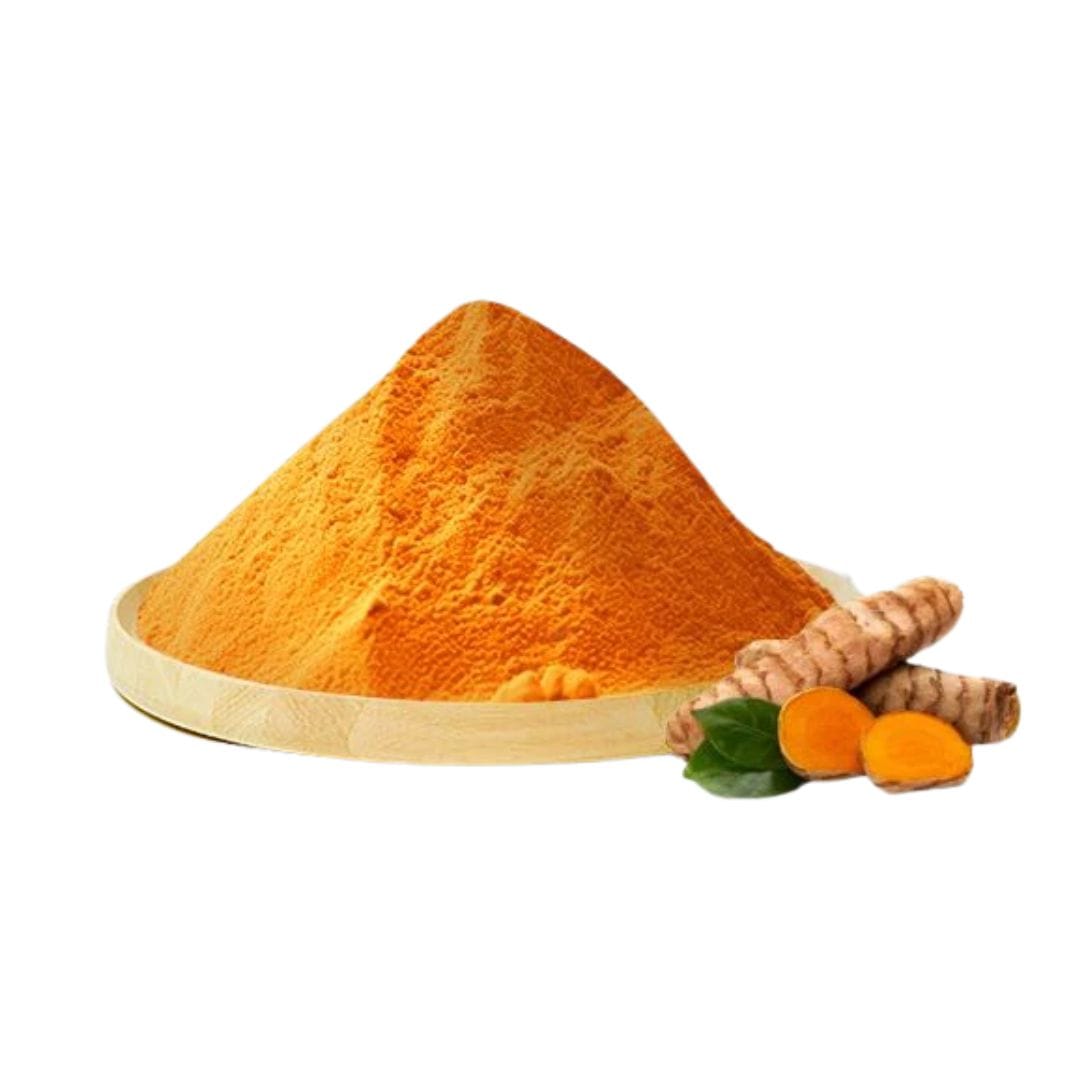
WHAT IS CURCUMIN?
Curcumin is a natural chemical compound present in the spice known as turmeric. Although these terms are occasionally used synonymously, the precise distinction is that turmeric refers to the golden-yellow powder utilized for seasoning, whereas curcumin is the specific bioactive component found within turmeric. In Indian and Asian traditions, both turmeric and curcumin have been employed for centuries as part of herbal remedies. Modern Western medicine is now exploring turmeric’s possible applications in managing conditions like cancer and diabetes. As with any dietary supplement, it is advisable to consult a healthcare professional before using turmeric or curcumin products.
Below is the extraction and manufacturing procedure for curcumin:
- Raw Material Sourcing – Curcumin is primarily derived from turmeric rhizomes. High-grade rhizomes are chosen for extraction.
- Pretreatment – The rhizomes are washed, peeled, and cut into small pieces, then dried at low temperature to reduce moisture content.
- Extraction – The dried pieces are milled into a fine powder and combined with a solvent such as ethanol or acetone to isolate curcumin. Extraction techniques may include ultrasound-assisted, microwave-assisted, or supercritical fluid extraction.
- Purification & Concentration – The initial extract contains other substances and must be refined and concentrated to achieve high-purity curcumin. Methods like column chromatography, liquid-liquid separation, or recrystallization are used for purification.
- Drying & Packaging – The purified curcumin is dried and packaged under conditions that prevent exposure to moisture and oxidation, ensuring extended shelf life.
QUICK DETAILS
| Specification | 95%,98% Curcumin |
| Extracted Part | Turmeric Root |
| CAS NO. | 458-37-7 |
| Customized Service | Available |
| Test Method | HPLC |
| Stock | In Stock |
| Heavy Metal | ≤ 10.0 mg/kg |
| Pb | ≤ 2.0 mg/kg |
| Hg | ≤ 0.1 mg/kg |
| As | ≤ 1.0 mg/kg |
| Total Bacteria | ≤1000 cfu/g |
FUNCTION
- Antibacterial & Anti-inflammatory – Exhibits antimicrobial and anti-inflammatory properties, allowing partial or complete replacement of certain antibiotics in animal feed.
- Antioxidant – Possesses significantly stronger antioxidant activity compared to tocopherol (Vitamin E) and carotenoids.
- Digestive & Growth Support – Helps protect the liver and gallbladder while enhancing nutrient absorption.
APPLICATION
- Pharmaceuticals – Serves as a raw material in medicines with anti-inflammatory and menstrual-regulating effects.
- Health Supplements – Used in wellness products aimed at supporting menstrual health.
- Cosmetics & Food Industry – Applied as a natural pigment, food additive, or seasoning component in cosmetic formulations and food products.